
Introduction
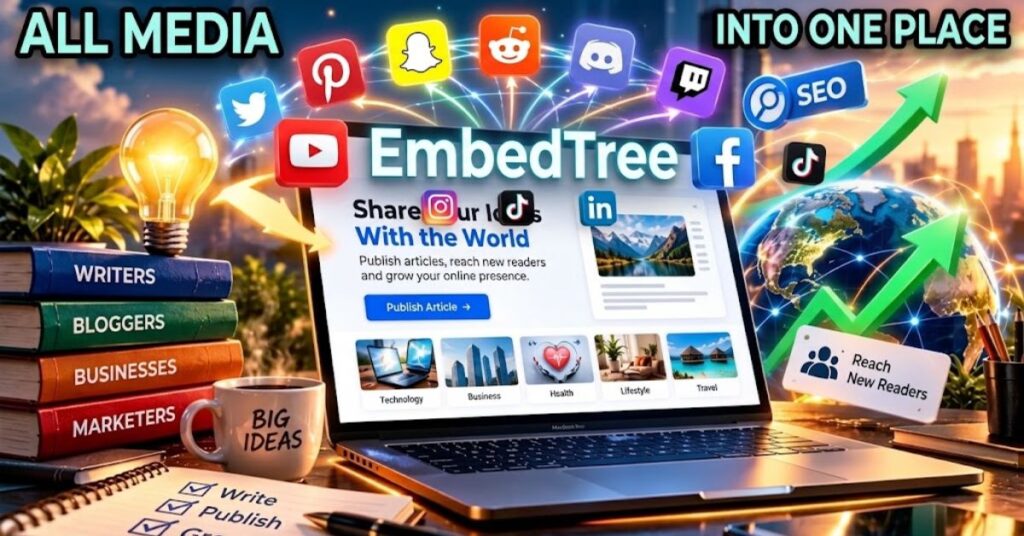
Social Media Stuff EmbedTree is a useful concept for creators, influencers, marketers, and businesses that want to organize their social media presence in one easy-to-access place. As audiences move between platforms such as Instagram, TikTok, YouTube, Facebook, and X, maintaining a clear digital presence has become increasingly important. Tools designed around social media aggregation can help users present multiple profiles, content channels, and important resources through a single destination.
This guide explains what EmbedTree.com offers, how social media embedding can support online branding, and what creators and businesses should consider before using this type of platform. You will also learn about potential use cases, content organization, audience engagement, and practical ways to build a stronger social media strategy.
What Does EmbedTree.com Offer?
EmbedTree.com is associated with the idea of bringing social media content and online resources together in a centralized format. Instead of asking visitors to search across different platforms, a creator or business can use an organized digital page to present important social profiles and content in one place. This approach can simplify navigation and give visitors a clearer view of a brand’s online identity.
For creators, this type of setup can be useful when managing several channels. A YouTube creator may want to highlight videos, while an Instagram user may focus on visual posts and an online store. Similarly, a business can organize social profiles, campaigns, contact information, and other digital resources. The main advantage is convenience: visitors can move from one resource to another without navigating multiple websites or searching for individual profiles.
Another important benefit is presentation. Social media is often the first place potential customers or followers encounter a brand. A well-organized landing page can make that experience more consistent. However, users should still verify the current features, terms, privacy practices, and available integrations directly through the platform before relying on it for business-critical workflows.
Quick Answer: What Is Social Media Stuff EmbedTree?
Social Media Stuff EmbedTree can be understood as a social media organization and embedding concept that helps users bring different pieces of their online presence together. The goal is to make social profiles, content, and useful destinations easier for an audience to discover.
For businesses and creators, centralized social media pages can reduce friction between discovery and engagement. Instead of presenting visitors with scattered profile links, a structured page can act as a digital hub. This can be especially useful for personal brands, content creators, small businesses, agencies, and professionals who maintain accounts across several platforms.
The exact capabilities of EmbedTree.com may change over time, so users should distinguish between general social media embedding practices and features currently offered by the service. Checking current platform information is the best way to confirm supported networks, customization options, analytics, pricing, and account requirements.
Why Social Media Aggregation Matters for Creators
Creators increasingly publish content across multiple platforms. A single creator might post short videos on TikTok and Instagram, longer videos on YouTube, updates on Facebook, and professional content on LinkedIn. Managing these channels can make it difficult for followers to know where to find the latest material. A centralized social media hub provides a simple solution to this discovery problem.
Social Media Stuff EmbedTree can therefore be viewed as part of a broader creator-marketing strategy. The objective is not simply to collect links. A strong hub should guide visitors toward the actions that matter most, such as watching a video, following an account, joining a newsletter, contacting the creator, or purchasing a product.
Additionally, organization can support brand consistency. Creators can use similar names, profile images, descriptions, and calls to action across platforms. When visitors move from one channel to another, consistent branding makes the overall experience easier to understand and remember.
How Businesses Can Use EmbedTree-Style Pages
Businesses can use social media hubs to connect marketing channels with customer-facing resources. For example, a small U.S. business could place Instagram, Facebook, YouTube, customer support information, product pages, and other important destinations within one organized location. This can be useful for businesses that receive traffic from social media but want visitors to have more options than simply following an account.
A centralized page can also support campaigns. During a product launch, event, seasonal promotion, or content campaign, businesses may want to direct customers toward a specific resource. A clear page structure helps visitors identify the most relevant action quickly. However, the page should remain focused rather than becoming an overcrowded collection of links.
For companies, trust also matters. Social media pages should use accurate business information, consistent branding, and clear contact details. Businesses should avoid misleading claims and should regularly review their links and embedded content. Broken destinations or outdated information can weaken customer confidence even when the underlying social profiles are legitimate.
Social Media Embedding and Audience Engagement
Embedding or organizing social media content can improve the way visitors interact with a brand. When relevant content is displayed together, users may spend more time exploring videos, posts, profiles, or other resources. This creates opportunities for stronger audience engagement without forcing visitors to search for every channel independently.
However, good engagement depends on content quality. A social media hub cannot compensate for outdated posts, inconsistent messaging, or weak calls to action. Creators should prioritize the platforms where their audience is most active and place the most valuable destinations near the top of the page.
Performance should also be reviewed regularly. Depending on the platform and available analytics, users may monitor clicks, referrals, engagement, conversions, or other useful indicators. These measurements can help identify which social channels actually contribute to business or creator goals.
Benefits and Limitations to Consider
One of the biggest benefits of a social media hub is simplicity. Visitors have a single place to find a creator’s or company’s online channels. This can be particularly helpful when a brand has several active profiles. It also provides greater control over how those destinations are presented compared with relying entirely on individual social platforms.
Another advantage is flexibility. A creator can change the destinations presented to an audience as priorities evolve. A business can highlight a campaign, product, newsletter, or customer resource when appropriate. Meanwhile, social platforms remain separate channels where the actual community interaction takes place.
There are limitations, too. A third-party service may change its features, pricing, integrations, or policies. Social networks can also change their embedding rules or application interfaces. For that reason, businesses should avoid depending entirely on one external platform for their digital presence. Maintaining ownership of a primary website and keeping important customer information under direct control remains a sound digital strategy.
Best Practices for Using Social Media Stuff EmbedTree
Start by identifying the actions that matter most to your audience. A creator may prioritize YouTube, Instagram, and a newsletter, while a local business may prioritize its website, contact information, directions, and customer reviews. The page should reflect actual audience needs rather than simply listing every available account.
Keep the presentation simple and current. Use recognizable account names, consistent branding, concise descriptions, and clear calls to action. Review the page periodically to remove inactive profiles and replace outdated campaigns. This small maintenance step can have a meaningful effect on user experience.
Finally, think about the page as part of a larger digital marketing system. Social media should support broader goals such as brand awareness, customer acquisition, content distribution, and retention. Social Media Stuff EmbedTree can be useful within that system, but its value ultimately depends on the quality and relevance of the content surrounding it.
FAQs
What is Social Media Stuff EmbedTree?
Social Media Stuff EmbedTree refers to using a centralized social media hub to organize profiles, content, and online resources. It can make multiple digital destinations easier for audiences to discover.
Is EmbedTree.com useful for small businesses?
It can be useful for small businesses that maintain several social media profiles or want to organize important online destinations in one place. Businesses should review the platform’s current features before adopting it.
How can creators use EmbedTree-style social media pages?
Creators can use centralized pages to showcase social profiles, videos, newsletters, products, portfolios, and other important resources. This can make it easier for followers to find their preferred channel.
Does social media embedding improve SEO?
Social media embedding does not automatically improve search rankings. SEO results depend on factors such as website quality, useful content, technical optimization, authority, relevance, and user experience.
Should businesses rely only on a social media hub?
No. A social media hub should complement, rather than replace, a business website and owned digital assets. Maintaining control over important content and customer information reduces dependence on third-party platforms.
Conclusion
Social Media Stuff EmbedTree reflects a broader shift toward centralized digital experiences. Creators and businesses often manage several social media channels, making organization increasingly important for both audiences and brands. A well-structured social media hub can make profiles, content, campaigns, and other resources easier to discover while supporting a more consistent online identity.
EmbedTree.com may be relevant to users looking for this type of organization, but platform features and policies can change, so current information should always be verified before making business decisions. Ultimately, the strongest approach combines social media organization with valuable content, consistent branding, an owned website, and a clear audience strategy. Used thoughtfully, a centralized social media presence can become a practical part of a modern digital marketing workflow.